Dance for Parkinson’s? Yes, please!
This episode of Your Ageless Musical Brain explores the surprising connection between dance, music, and brain health for people with Parkinson’s. Host Lucy Blanco chats with David Leventhal, a Dance for PD® authority. David shares how dance improves physical and emotional well-being, empowers individuals, and even slows symptom progression. Tune in and learn the science behind the magic of music and rhythm for healing, how dance fosters community and self-expression, and Dance for PD’s® global reach and culturally-sensitive programs.
Parkinson’s? There’s hope! Dance for PD® offers a path to rediscovery, connection, and joy. Tune in and visit https://danceforparkinsons.org/ to find a class or explore online options. Let’s move!
—
Unleash The Healing Power of Dance: Move With Parkinson’s! With David Leventhal
My very special guest is a sought-after speaker and recognized authority in the world of Dance for Health. As a Program Director and Founding Teacher at Dance For PD, he leads classes for people living with Parkinson’s Disease around the world. He trains thousands of teaching artists in 28 countries for the Dance For PD approach. His name is David Leventhal. Thank you for coming to the show, and welcome.
Lucy, I’m glad to be here. Thank you for inviting me.
The pleasure is all mine. Thank you, David. David also pioneered an innovative Google Glass app. It’s an idea called Moving Through Glass. It’s a dance-based app for people with Parkinson’s. He’s also co-authored numerous peer-reviewed studies on the impact of the Dance For PD approach and the impact that it’s had on people living with Parkinson’s disease.
David designed a dance-based course for the narrative medicine curriculum at Columbia University’s College of Physicians and Surgeons. He’s also a dancer. He performed with the Mark Morris Dance Group from 1997 to 2011. David, let’s talk about what you do and how you create value for people living with Parkinson’s. Talk to us about your classes and how people benefit from them.
Transforming The Journey Through Dance
My goal is to help people living with Parkinson’s transform their experience, story, and journey with Parkinson’s through dance. What that looks like is different for each individual, but overall, what we see is that dance supports both a physical, emotional, and social journey for our participants. What I mean by that is we see a range of physical and motor benefits. IE dance positively impacts a number of elements related to physical skill, balance, coordination, and gait, such as walking, and this has all been picked up in the scientific literature. There are significant changes in those motor scores for people participating in the Dance for PD program.
We’re also seeking to support our participants by providing an expressive and creative outlet by creating a sense of community and giving them a sense of belonging to a group when a number of people feel isolated and perhaps stigmatized by their Parkinson’s. We have also seen in the research literature benefits in cognition, particularly in terms of executive function, which is one of those aspects of living with Parkinson’s that has started to change. We see dance as a full-spectrum activity that can respond to and support the full-spectrum challenges of Parkinson’s.
Dance has also done the crossover now with health. It’s been scientifically proven now how beneficial it is.
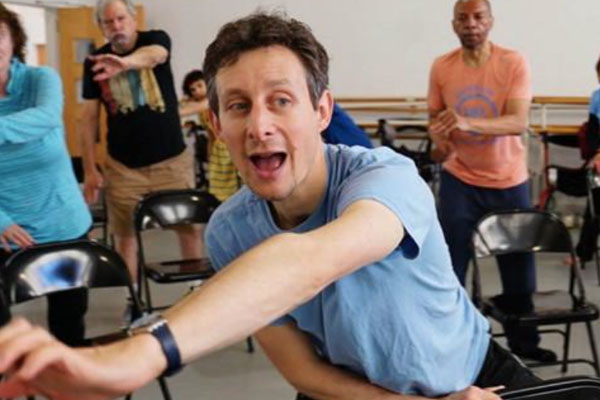
Dance has been connected to healing and well-being for millennia. When we look at traditional and indigenous societies, we see that dance and music are used as part of traditional healing rituals. It’s only in the last few hundred years that we’ve separated medicine from art and medicine from dance. What we’re seeing now with the benefits of modern scientific research, we’re starting to understand how supportive and beneficial dance is for a wide range of conditions, particularly those on the neurological spectrum, but also conditions including diabetes, heart disease, and depression or people living on the autism spectrum. It is a wide range.
My focus is primarily on dance as a tool and support for people living with Parkinson’s. Research has shown that over a three-year course of investigation, people participating in a weekly Dance for PD class showed a slower symptom progression than a control group not participating in dance. This is significant because we know that dance is effective. We know it helps people feel better. It gives them a sense of confidence and helps them work on specific skills like balance and walking. To show over time that it contributes to a slowing of symptom onset is a significant finding for a condition that has no cure.
It has long-term effects. Talk to us about the movement, embodiment, and temporality. I understand that you have taken part in a case study called From Patience to Dancers. Can you elaborate on that with regard to the transformation through the arts?
From Patients To Dancers
In this particular essay, I was interested in understanding how participating in a dance class can help people living with Parkinson’s reform their identities. This is one of the fundamental things that arts interventions can do. When people come into a dance class, they are immediately treated as dancers. They are not treated as patients. In the rest of the world, they are seen as patients. They are medicalized. Parkinson’s hovers around them like a cloud.
One of the fundamental things that arts interventions can do when people come into a dance class is they are immediately treated as dancers. They are not treated as patients.
In a dance setting, we, as teaching artists and choreographers, don’t seek to learn, explore, and experience this incredible art form. We see that people are coming in like all of our other dance students. They’re coming into treating them as dancers, artists, and individuals. Parkinson’s is present in the back of our minds because we want the class to be safe and evidence-based. We’re drawing on what we know from a research standpoint.
When they’re in that class, we approach it as an artistic experience. Every way that we interact with our participants as fellow dancers. We’re working collaboratively with them to change the feelings that people have about their own identity and think about their Parkinson’s story. Parkinson’s is not taking over their lives. They have agency. They have the ability to be creative and physical problem solvers like choreographers are and take on the identity of a dancer.
I think of a wonderful quote from one of our participants in the film Capturing Grace. She says, “When I’m in this class, I have to treat my body like a dancer. I have to think about being a dancer and take on that persona.” That affects things like posture, how we hold ourselves, and how we approach music and rhythm.
Our whole feeling about what it means to live with Parkinson’s and to think like a dancer is to have agency and power over your body to control your body, think about possibilities, and not be walking around in a cloud of limitation and doubt. That transcends or spurs people on to other experiences that will fulfill them in similar ways and help them reform an identity around what’s meaningful to them rather than the health condition they’re dealing with.
I love the way you play choreographer, and they’re the actors. They’re the ones that are visualizing being in a different character. I see the expression on their faces. I’ve seen the videos of your programs, and by envisioning themselves as different characters, they go with the flow of that moment and seize the moment, which is a beautiful thing.
We talked a lot during our training, and we embedded this idea of co-creation in our classes. It’s not only that the trained teachers are offering movement material for people to learn, but we’re also providing opportunities for our Parkinson’s dancers to create their own dances and choreography. That’s important because it’s a critical part of the creative and artistic process of being a dance artist.
It’s also important because they have to contend with the choreography of life. When they leave the studio and go out into the world, they are their own choreographers. They have to figure out how to navigate challenges that come up and how to navigate parameters that the world places around them. To be able to navigate that creatively with the mind of a choreographer is incredibly powerful for them.
Creatively navigating challenges and the world’s limitations with a choreographer’s mindset is incredibly empowering for them.
They end up telling their own story of their own transformation, which is a beautiful thing. What about the new projects that you’ve been working on? Tell us about that.
Music And Mind
I’ve contributed to editing an election of essays about music and health. The book is called Music and Mind. It’s edited by Renée Fleming, who needs no introduction. Renée has been interested in the healing and health-related properties and power of music for a long time. She and Francis Collins, former Director of the National Institute of Health, have partnered on a sound health initiative, which looks at music and health from a wide-ranging set of perspectives.
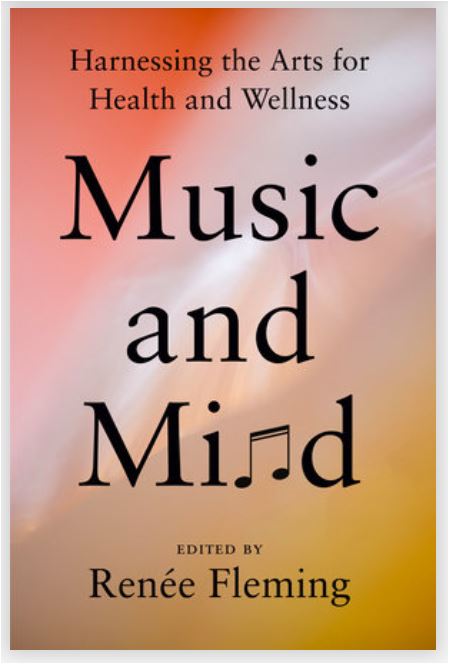
Renée asked me to contribute a chapter about music, dance, and Parkinson’s. It’s been clear to us from the first class that I taught that music is the fundamental foundation and the underpinning for everything that we do. One of our participants said that music is like a red carpet that rolls out in front of him and provides this incredible sense of support, power, and joy.
It’s a magical experience.
As with most things that seem magical, there’s a lot of strong science supporting the transformative power of music for people with Parkinson’s. We’ve looked at for a number of years what would be called rhythmic auditory stimulation. This idea is that you can take rhythm and, through rhythm, synchronize pathways in the brain. The auditory and motor systems work together in synchrony. That is particularly important in Parkinson’s, when an internal sense of rhythm may be more difficult to access. I will talk about that in the chapter. I talk about the importance of eating and rhythm.

Is that like rhythmic entrainment?
Entrainment is part of that. We entrain to rhythm. What happens in the class is we’re in training to the rhythm we hear, but we’re also in training to a rhythm we seek because dance is a visual form. We see the teacher or the other participants moving to a certain rhythm, which also supports this idea of moving to music.
In the chapter, I wanted to go deeper. I wanted to understand the elements of the beat. For example, upbeat and downbeat might be particularly supportive of something like walking. I wanted to talk about something in music called anacrusis, which is a strong upbeat that leads into a downbeat. This anticipatory action and rhythm is what gives someone living with Parkinson’s, or I hypothesize, this sense of getting ready to move, initiate, and be on the music on that first beat.
I also talk about duration, which is important because in Parkinson’s, sometimes sustained movement can be quite difficult, and music gives us a roadmap for how to sustain movement through a musical phrase. That is something that dancers train to do from a young age, where it’s not a move that goes out and comes in, but it’s about how you get there. How much time do you have to get there?

The anticipation can feel what the rhythm is going to be. Your body is in sync with that.
You feel that anticipation. You’re ready to move. The music gives you a roadmap for how to move and how long to move. All of that information is embedded there without having the analytical. I quote the art historian Walter Peter, who said, “All art aspires to the condition of music. Music has a direct relationship.” This means that we can’t even put it into words, but somehow, we know what music is telling us.
As dancers, even beginning dancers, when we hear music, we start moving and tapping to it. There’s a direct entrainment to it. All of that points to the immense broad-spectrum power that music has. I also talk about music’s power to connect us to a great community. We are bonded by shared experiences that have us moving to the same beat. That is part of our human evolutionary instinct.
We were meant to be in the community setting.
The way that we express that is through moving and dancing together.
It’s self-expression.
One reason that evolutionary biologists feel that dance has continued on through our species, even when it doesn’t necessarily provide us with food, nourishment, or economic stability. There’s something that dance must do. There are numerous health benefits, but one of them is the idea that it brings us together as a species. It helps us work and communicate together. Music plays a huge role in that.
The brain is resilient. It continues to be resilient as long as we give it permission to be.
It’s more than permission. We have to find opportunities that stimulate the brain in novel and new ways, but also ways that we’re already wired to move. Music is both novel and familiar. It’s novel in that we may not have heard the music before, but it’s familiar in that we recognize the elements of it. We recognize rhythm, phrasing, and emotional tone, even if we don’t know the music. Music sounds a certain way to us happy, sad, or melancholy. We get that right away, even if we don’t have a degree in music or we’ve never played an instrument. That’s what Walter Peter is talking about. It fosters an immediate instinctual reaction that generates a response.
To stimulate the brain, we need opportunities that are both new and familiar, aligning with our inherent movement patterns. Music perfectly embodies this concept.
Thank you so much for sharing. With regards to the book, that’s going to be in the show notes. The audience can purchase the book. How do we get to know more about you? Dance for PD is where we can find you.
DanceForParkinsons.org has lots more information. One of the other things that we’ve been working on is creating more access to our classes by sustaining the online classes that we started during the pandemic and creating opportunities for people all over the world to dance with us, even if they’re not able to get to a live class.
This is something that we feel strongly about because there are more than 10 million people around the world living with Parkinson’s. The vast majority of them are not engaged in any movement activity, physical activity, or creative activity. We want to change that. Dance is a universal art form. It is found throughout the world. It is found in almost every culture. There is a dance infrastructure that exists in almost every culture.
Our goal is to empower that infrastructure that’s teachers, studios, dancers, and choreographers to reach out to the Parkinson’s community. We’re in 30 countries, but there are a lot more countries where this work needs to happen. We want to figure out ways to make that happen in ways that are culturally sensitive and specific. It’s not about an export or colonizing approach. It’s about partnerships and collaborations that build trust. Local partners who might be interested in this know that they can develop this program using our templates, models, and methods, but on their own terms, artistic style, and cultural language. That’s important.
That is what’s worked so far for this program around the world because music and dance are universal, but they’re also specific. The music that individuals with Parkinson’s in Senegal might be different from the music that people like in New Zealand and China. We want to create a framework or a template that can then be adapted in ways that make it culturally specific, attractive, and fun for the individuals in that particular community.
You make such a difference. I love the awareness that you create, and we will keep in touch. I can’t wait to see more of what projects you’re going to be involved in and how you continue to grow in dance for Parkinson’s. Thank you so much for the value you create and your agentless musical brain, David. Thank you so much.
Thank you so much for having me back.
Important links:
About the Guest
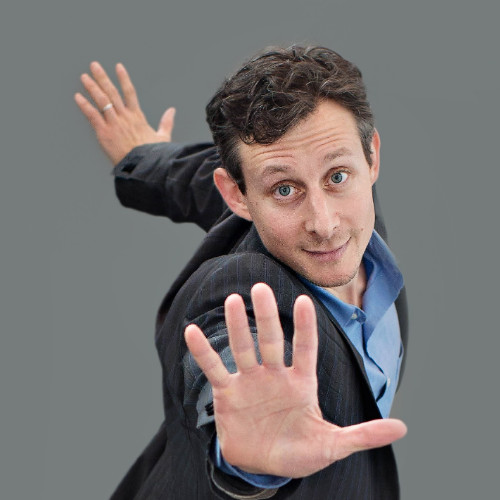
David Leventhal is a founding teacher and Program Director for Dance for PD®, a program of the Mark Morris Dance Group that has now been used as a model for classes in more than 300 communities in 25 countries. He leads classes for people with Parkinson’s disease around the world and trains other teachers in the Dance for PD® approach around the world. He’s conceived and co-produced five volumes of a successful At Home instructional video series for the program and has been instrumental in initiating and designing innovative projects involving live streaming and Moving Through Glass, a dance-based Google Glass App for people with Parkinson’s.
For his work on behalf of the Parkinson’s community, he received the Alan Bonander Humanitarian Award from the Parkinson’s Unity Walk, the Martha Hill Mid-Career Artist Award, the IADMS Pioneer Dance Educator Award, and the 2016 WPC Award for Distinguished Contribution to the Parkinson’s Community. He was recently featured in the 2024 ‘Art Desk 100’ listing of creators, thinkers, and voices who give the best of themselves and “evangelize for a better world in a way that transcends their own success.”
Leventhal has contributed chapters to the Bloomsbury Handbook of Philosophy and Dance (Bloomsbury, 2021), Moving Ideas: Multimodal Learning in Communities and Schools (Peter Lang, 2013), and Creating Dance: A Traveler’s Guide (Hampton Press, 2013), and has served as a co-author on a number of peer-reviewed studies. Leventhal designed and currently teaches a pioneering dance-based elective course that is part of the Narrative Medicine curriculum at Columbia University’s College of Physicians and Surgeons. He’s featured in the award-winning 2014 documentary Capturing Grace directed by Dave Iverson.
Leventhal serves on the Board of Directors of the Davis Phinney Foundation and Dance & Creative Wellness Foundation and on the Advisory Board for the Georgetown Lombardi Cancer Center Arts & Humanities Program. He’s a charter member of IADMS’ Dance for Health Committee.
As a dancer, he performed with the Mark Morris Dance Group from 1997-2011, appearing in principal roles in Mark Morris’ The Hard Nut, L’Allegro, il Penseroso ed il Moderato, and Prokofiev’s Romeo & Juliet, on Motifs of Shakespeare. Leventhal received a 2010 Bessie (New York Dance and Performance Award) for his performing career with Mark Morris. He graduated from Brown University with honors in English Literature.
Board Member, Davis Phinney Foundation
Founding Member, Dance for Health Committee, IADMS
Founding Advisor, NeuroArts Blueprint
Founding Advisor, Georgetown Lombardi Arts & Humanities Program
 Your Ageless Musical Brain Podcast LLC.